OUR AIMS

Education
There are a number of regional groups
who meet regularly to discuss latest
developments in epilepsy, provide
networking opportunities, peer support
and CPD.

Expertise
We are nurses and other health
professionals working to support
people with epilepsy.

Empowerment
We raise the profile of epilepsy and
promote an holistic and
multi-disciplinary approach.
ESNA 2026 Conference
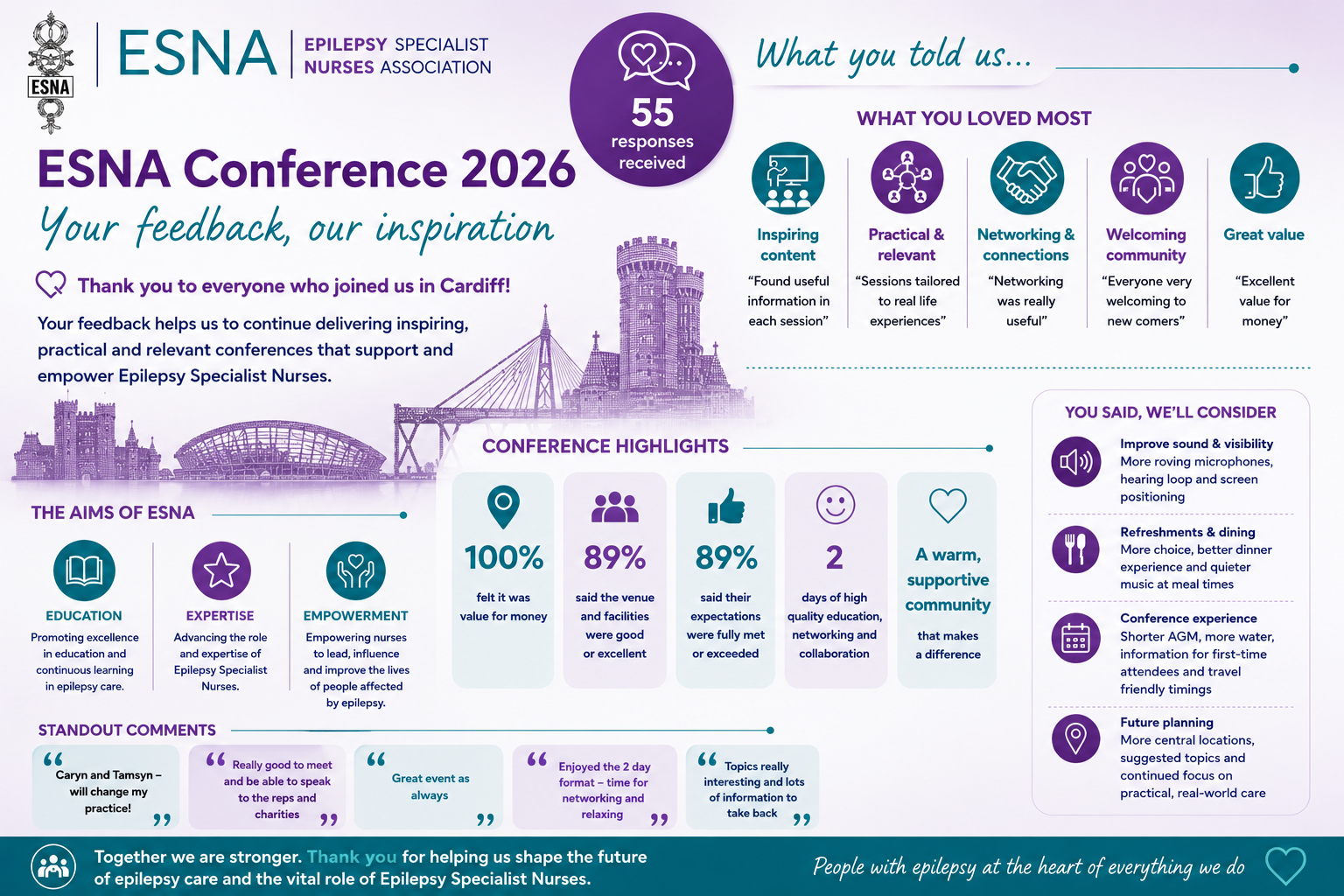
ESNA Conference 2026 – Cardiff
Our 2026 ESNA Conference brought together Epilepsy Specialist Nurses and colleagues from across the UK for two days of education, collaboration and professional development.
The feedback was overwhelmingly positive, with 100% of delegates describing the conference as value for money, and almost all reporting that their expectations were fully met or exceeded. Delegates particularly valued the practical, evidence-based programme, the opportunity to network with colleagues, and the warm, welcoming atmosphere that makes ESNA conferences unique.
Sessions on risk versus benefit in epilepsy treatment, epilepsy surgery, learning disability, updated clinical classifications, Buccal Midazolam Best Practice Guidelines and the innovative "Tell me, Explain to me, Describe to me" presentation were highlighted as particularly thought-provoking and relevant to everyday clinical practice.
Many delegates commented on the supportive nature of the ESNA community, especially for nurses new to specialist practice, describing the conference as inspiring, educational and a place where they felt welcomed and able to share ideas.
As always, we greatly value every piece of feedback received. Suggestions regarding venue facilities, conference organisation and future topics have been carefully reviewed and will help shape future ESNA conferences as we continue to deliver high-quality education, promote expertise and empower Epilepsy Specialist Nurses across the UK.
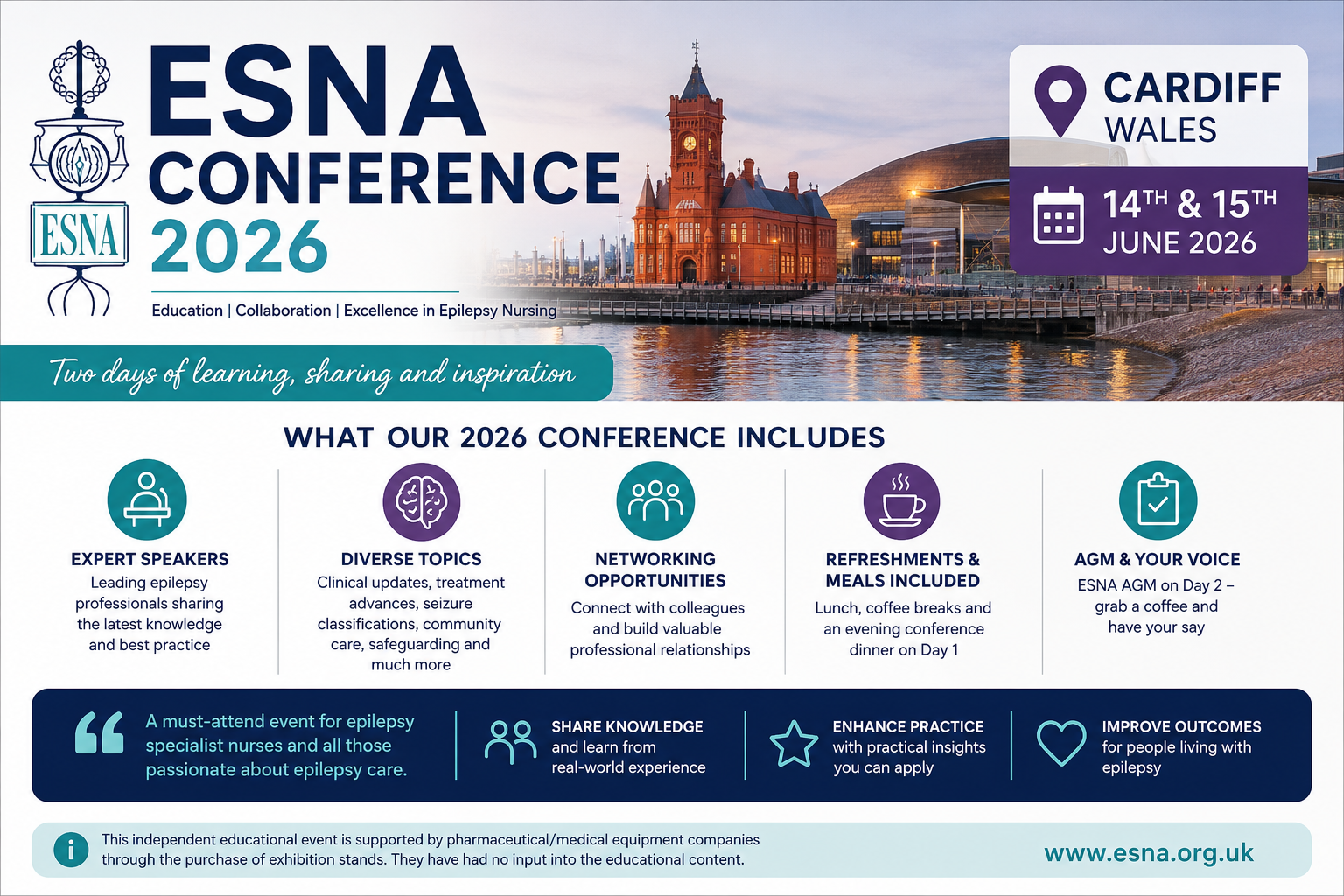
We ae looking forward to welcoming you to the 2026 Conference
You can download the agenda here...
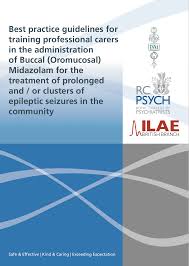
2026 Best Practice Guidelines
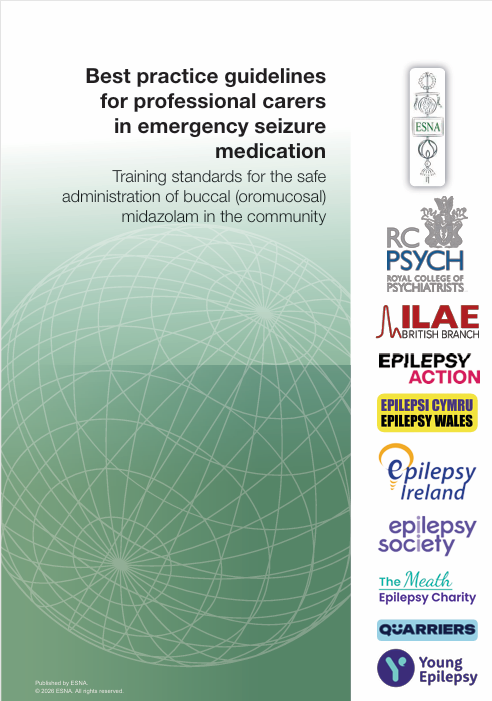
National Collaboration Shapes New Best Practice Guidelines for Emergency Seizure Medication
The Epilepsy Specialist Nurses Association (ESNA) has published a major revision of its Best Practice Guidelines for Professional Carers in Emergency Seizure Medication following the most collaborative review in the document’s history.
Over six months, more than 40 contributors from over 30 organisations across the UK and Ireland helped shape the updated guidance. Contributors included epilepsy specialist nurses, pharmacists, educationalists, governance specialists, care providers, charities, training organisations and researchers.
The review was led by Caryn Jory, Deborah Coker, Sally-Ann Remnant and Fiona Short and used a structured consensus process involving expert meetings, consultation exercises, Delphi-style questions and stakeholder feedback.
The revised guidance reflects developments in evidence, learning from national reviews and the increasing complexity of epilepsy care in community settings. Key updates include enhanced standards for training and competency assessment, clearer expectations for trainer qualifications and governance, and defined standards for virtual and blended learning.
Caryn Jory, Vice Chair of ESNA and Lead Author, said:
“This review brought together a wider range of voices than ever before. By combining clinical expertise, educational knowledge, governance experience and practical care perspectives, we have developed guidance that is both evidence-informed and grounded in real-world practice.”
The review was supported by Professor Rohit Shankar MBE FRCPsych, Professor in Neuropsychiatry at the University of Plymouth, who described the collaboration as an important step towards safer and more consistent epilepsy care.
The updated guidelines aim to support healthcare professionals, social care providers and training organisations in delivering safe, high-quality emergency seizure medication practice across community settings.
One Guideline. National Collaboration. One Shared Goal: Safer Epilepsy Care.
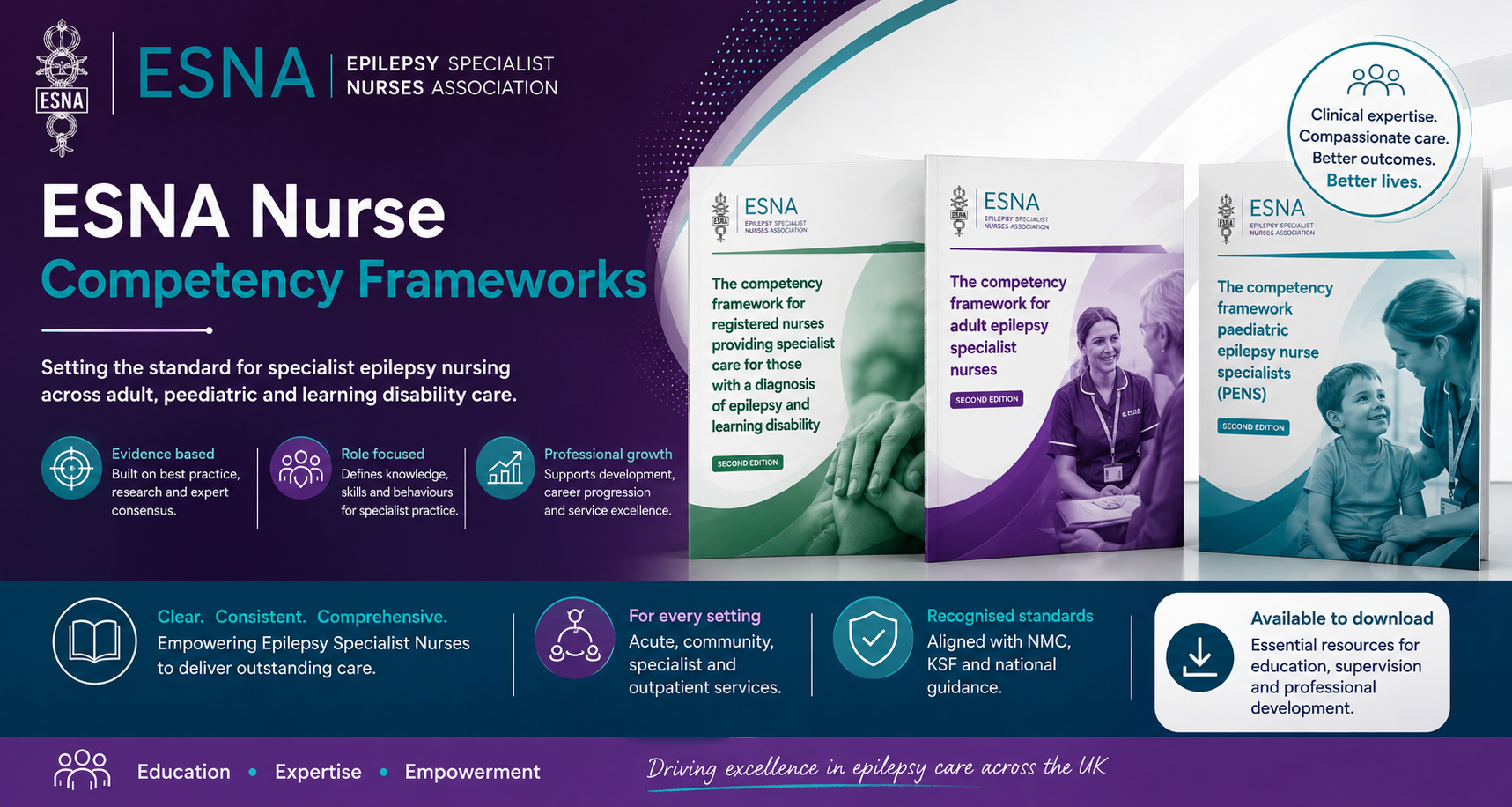
Epilepsy Nurse Competency Frameworks
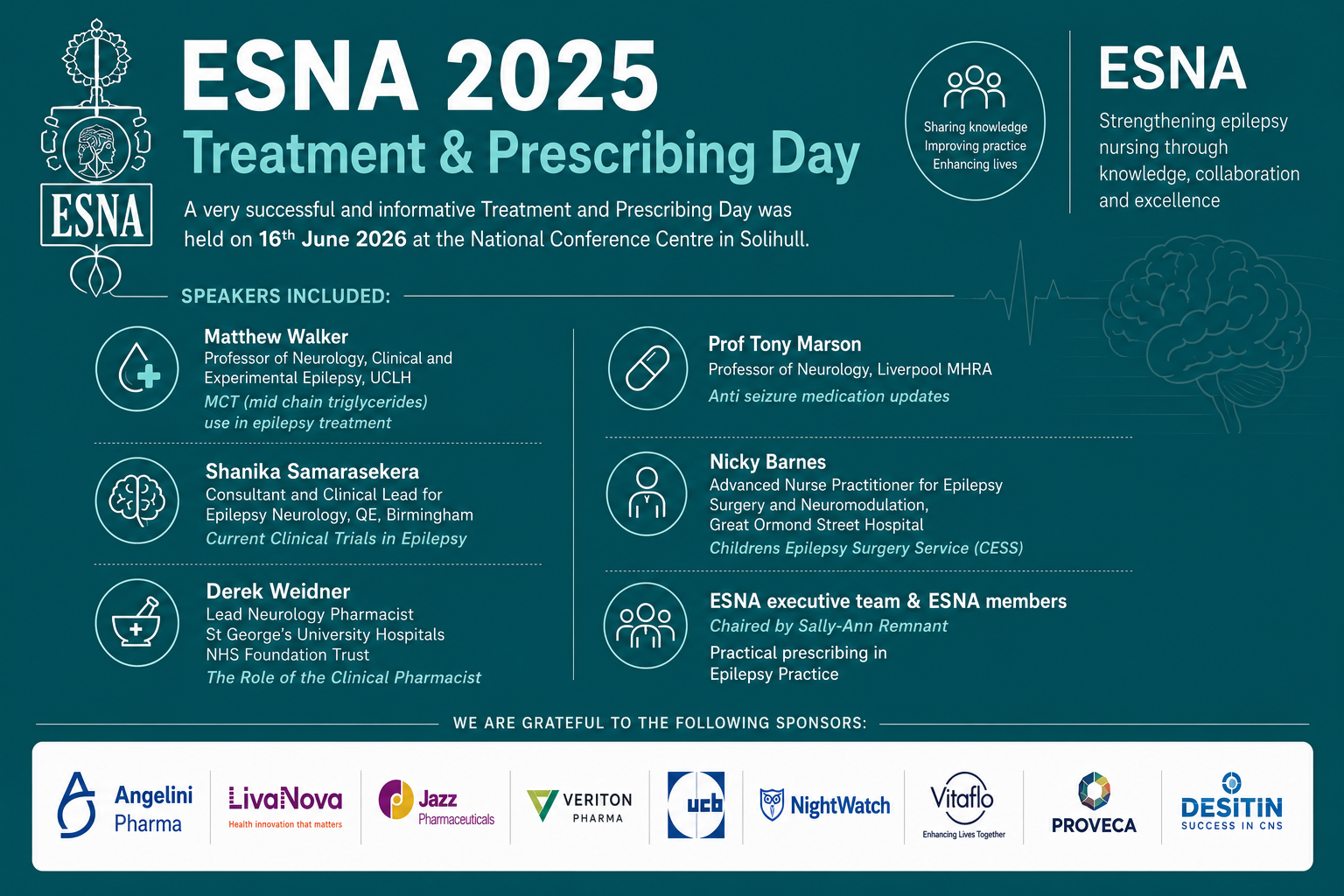
2025 Treatment & Prescribing Day
LATEST NEWS